
The best things to do in Mirleft are to explore its Atlantic beaches, watch the swell or take a properly matched surf lesson, climb toward the hilltop fort, visit the Monday souk and use the village as a base for Legzira, Sidi Ifni and Tiznit. Mirleft suits travellers who prefer coast, outdoor time and an unhurried small-town rhythm to a dense checklist of monuments.
Allow three nights for a relaxed first visit: one day around the village and nearby beaches, one day shaped by the weather, and one day trip. The Atlantic sets the pace here, so check sea conditions, paths, transport and opening times on the day.
Mirleft at a glance
- Best for: beaches, surfing, coastal walks, photography, slow travel and quiet evenings.
- Ideal stay: three nights for the village, two different coast days and one flexible day trip.
- Location: southern Atlantic Morocco, about 40 km south of Tiznit and roughly 30 km north of Sidi Ifni.
- Weekly market: Monday is the usual souk day; ask locally if your plans depend on it.
- Without a car: the centre and nearby beaches are manageable, but a car or arranged driver makes the wider coast easier.
- Swimming: never guaranteed; this is exposed Atlantic water with changing swell, currents, rocks and tides.
- Population: the wider commune counted 9,828 residents in 2024; the compact visitor centre is smaller.
Is Mirleft worth visiting?
Yes, if you want a smaller base between the Anti-Atlas foothills and the Atlantic. Mirleft is not a polished resort and does not have the sightseeing density of Marrakech or Essaouira. Its value is the combination of cliff-backed beaches, surf culture, everyday village life and easy access to a wider coastal route. The Moroccan tourism office describes Mirleft as a cliff-top village 40 km south of Tiznit and highlights its coves, beaches and board sports.
It may be the wrong choice if you want nightlife, a large pedestrian old town, luxury shopping or an attraction every hour. The centre is functional rather than monumental, and the ocean frequently decides the day. Travellers who are happy to watch a beach from shore, change plans with the wind and spend time over tea tend to understand the place best.
| Question | Practical answer |
|---|---|
| Where is Mirleft? | In Sidi Ifni Province in Morocco’s Guelmim-Oued Noun region, between Tiznit and Sidi Ifni. |
| What is Mirleft known for? | Atlantic beaches, cliffs, surfing, paragliding, a quiet village rhythm and access to Legzira. |
| How long should you stay? | Two nights gives a taste; three or four nights creates room for weather, surf and a day trip. |
| Do you need a car? | No for a simple town-and-nearby-beach stay; useful for remote coves, Legzira, Sidi Ifni and Tiznit. |
| Is it a swimming resort? | No. Some days and places may work, but conditions require a same-day local decision. |
Best things to do in Mirleft
| Experience | Time | Best for | Main limitation |
|---|---|---|---|
| Imin Turga and Aftas beaches | Half day | First visit, walking, sunset, coast views | Swimming and services depend on the day |
| Surf lesson or surf watching | 2–3 hours | Beginners with instruction; experienced surfers with local knowledge | Swell, tide and wind can cancel the plan |
| Fort Tidli viewpoint | 1–2 hours | Panorama, sunset, orientation | Uneven access, ruins and possible private or unstable areas |
| Monday souk | 1–2 hours | Produce, household goods and local life | Weekly timing; primarily a working market |
| Coastal walk | 1–3 hours | Photography and quiet scenery | Cliff edges, heat, wind and tide need planning |
| Legzira and Sidi Ifni | Full day | Red cliffs, remaining arch and town architecture | Tide, rockfall and transport timing |
| Tiznit | Half or full day | Medina walls, silver craft and inland contrast | Warmer inland conditions and travel time |
1. Start with Imin Turga and Aftas
Imin Turga—also written Imi Ntarga—is the broad main beach below the village plateau. It is the easiest place to understand Mirleft’s scale: sand, ochre headlands, Atlantic swell and an elevated village above. Choose it for a long walk, sunset or watching surfers rather than arriving with a fixed promise to swim.
Aftas is a tighter cove close to town, with fishing activity and a more intimate feel. It is a good second beach because it shows how quickly the coastline changes around one headland. Boats, ropes and working access take priority. For comparisons, access notes and the wider coast, use the complete guide to Mirleft beaches.
2. Surf—or learn how to read the ocean
Morocco’s tourism office identifies Mirleft as a board-sports destination with several areas that suit different abilities. That does not mean one named break works for everyone. Sandbanks move, winter swell can be powerful and wind may change the useful beach within hours.
First-timers should book a qualified instructor who chooses the location after checking the day’s swell, wind and tide. Ask about group size, equipment, insurance, transport and what happens when conditions are unsuitable. Experienced surfers should still request local guidance before entering an unfamiliar rocky area. The Mirleft surfing guide explains the seasonal pattern and safer decision process.
3. Walk toward Fort Tidli for the view
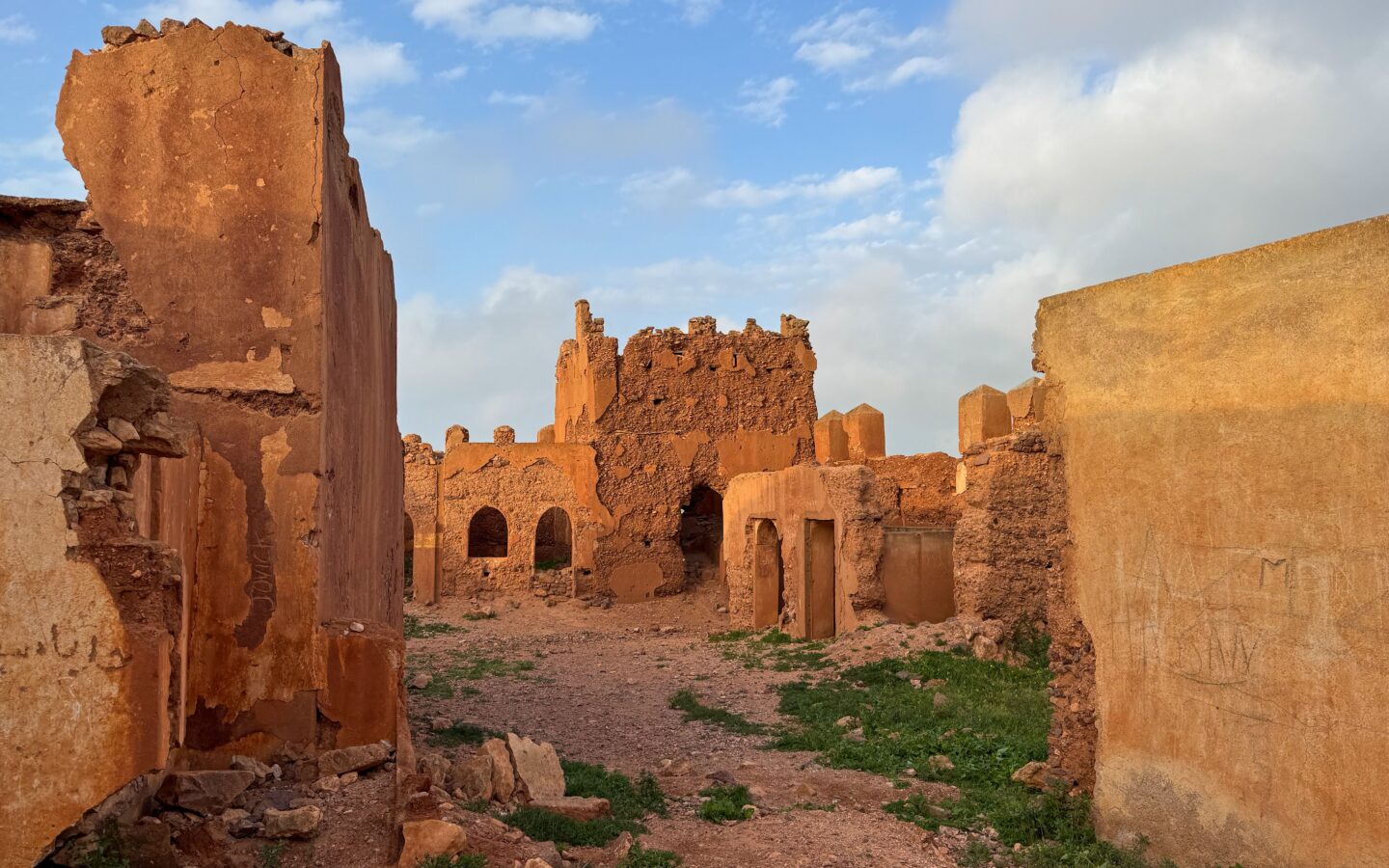
The hilltop military post commonly called Fort Tidli is one of Mirleft’s few recognisable built landmarks. Travel references date it to 1935. The approach gives a useful panorama over the village, the dry valley and the ocean, particularly in late-afternoon light.
Treat it as a viewpoint and historic ruin, not an adventure playground. Paths can be uneven, boundaries can change and old structures may be unstable or privately managed. Do not climb walls, enter closed areas or stand beneath damaged masonry. Ask at your accommodation for the current route before setting out.
4. See Mirleft on Monday morning
Monday is Mirleft’s documented weekly souk day. The market is useful precisely because it is not staged as a tourist attraction: residents and traders come for produce, spices, clothing, household goods and regional products. Go in the morning, keep small dirham notes and make room for people doing their weekly shopping.
Ask before photographing a person or stall, and do not turn bargaining into a performance. Market schedules can shift around holidays or local circumstances, so reconfirm the day if you are arranging the entire trip around it.
5. Take a tide-aware coastal walk
Mirleft rewards short walks between elevated viewpoints more than ambitious distance targets. From the plateau, tracks lead toward beaches and headlands with changing angles over the Atlantic. Late afternoon generally gives softer light and cooler temperatures, but it also reduces the time available to solve a wrong turn.
Keep well back from cliff edges, avoid caves and overhangs, and do not assume a shoreline route remains open as the tide rises. Wear shoes with grip, carry water and download an offline map. On remote tracks, turn around before the route feels committed.
6. Eat slowly and try a hammam
The useful food experience in Mirleft is not a list of “must-visit” restaurants that will age quickly. Look for places serving tagine, couscous on its traditional day, grilled fish when available, Moroccan salads, bread, mint tea and amlou. Ask what is fresh, confirm prices before ordering and allow for a slower pace than in a city restaurant.
A hammam can be a good recovery activity after surf or walking. Local public hammams and private spa-style options are different experiences, with different expectations about equipment, privacy and timing. Ask your host what to bring and which option fits you rather than arriving unprepared.
7. Plan one focused day trip
Legzira and Sidi Ifni make the most natural southbound combination. Visit the red-cliff beach only after checking the tide, stay away from the cliff base and remaining arch, then continue to Sidi Ifni for a seafront walk and the centre’s Spanish-era architectural character. Older Legzira photographs show two arches; one collapsed in 2016.
Tiznit, about 40 km north, gives a useful inland contrast through its walls, medina and silver-working tradition. Do not try to combine Tiznit, Legzira and Sidi Ifni into one rushed day. Choose north or south and leave room for road conditions, stops and lunch.
If you have only one day
Walk through the centre in the morning, choose Imin Turga or Aftas after checking conditions, eat lunch in the village and finish at a safe elevated sunset viewpoint. Add the Monday souk when the calendar aligns. Do not spend a short visit driving to three distant beaches.
A practical three-day Mirleft itinerary
- Day 1 — understand the village: settle into the centre or a nearby beach area, walk the main streets, compare Imin Turga and Aftas, and watch sunset from above the water.
- Day 2 — choose by conditions: take a surf lesson, book another guided outdoor activity or make a conservative coastal walk. Use the fort viewpoint only after confirming current access.
- Day 3 — one regional excursion: go south to Legzira and Sidi Ifni, or north to Tiznit. Keep the alternative for another day instead of compressing the whole coast into a checklist.
With a fourth day, leave the schedule open. That buffer is valuable when swell, wind, haze, tiredness or transport changes the original plan.
Best time to visit Mirleft
| Period | Typical planning advantage | Watch for |
|---|---|---|
| October–March | More consistent Atlantic swell and mild coastal days; useful for experienced surfers | Cool evenings, rain spells and surf that may be too powerful for beginners |
| April–June | Comfortable walking weather and a balance of village and coast time | Increasing wind, marine haze and variable surf |
| July–August | Warm weather and lively domestic holiday periods | Busier beaches, stronger sun, wind and limited last-minute accommodation |
| September–October | Warm coast, fewer peak weeks and changing surf pattern | Do not assume calm water; autumn swell can arrive quickly |
There is no universally best month. Surfers choose around experience and swell; walkers may prefer milder shoulder periods; travellers focused on the souk should include a Monday. Pack sun protection, a windproof layer and something warmer for evenings in every season.
Where to stay in Mirleft
Village centre
Choose the centre for cafés, groceries, taxis and the easiest evenings without a car. You will trade direct ocean views for practical access and a more everyday village setting.
Imin Turga area
Choose the main-beach side for sea views and quick coast access. Check the actual walking route, gradient and distance to restaurants; a listing that looks close on a map may involve a climb.
Aftas and the quieter edges
Choose Aftas or an outlying property for a quieter stay, then confirm road quality, parking, lighting, Wi-Fi and food options. A rental car or arranged transport becomes more useful outside the centre.
Getting to and around Mirleft
Agadir Al Massira Airport (AGA) is the most practical air gateway for many international visitors. From Agadir or the airport, options include a private transfer, rental car, shared taxi and bus connections through regional hubs. Services, fares and baggage rules change, so use the step-by-step guide to getting to Mirleft rather than relying on an old timetable.
The central village is walkable, while the coast spreads across hills, coves and side roads. Shared taxis work for established routes when seats and timing align. A car adds flexibility but not immunity from rough tracks, poor lighting or unfamiliar driving. Avoid remote arrivals after dark and agree taxi prices and return arrangements before departure.
Money, connectivity and daily planning
- Currency: the Moroccan dirham (MAD). Carry small cash for markets, taxis and simple cafés; do not rely on every card terminal or cash machine working.
- Mobile data: useful for navigation, but download maps and booking details before remote coast trips.
- Language: Moroccan Arabic and Amazigh are central to local life; French is widely useful and English varies by business.
- Supplies: buy water, sun protection and snacks in the village before heading to an isolated beach.
- Friday rhythm: some businesses may adjust around Friday prayers; confirm rather than assuming normal hours.
Safety in Mirleft
- Ocean: ask for same-day advice, watch the water and stay out when conditions exceed your ability. Never assume a sandy beach or lesson area is always safe.
- Cliffs: keep back from edges, caves, arches and damaged walls. Erosion and rockfall do not require stormy weather.
- Tide: check it before any shoreline walk and turn back early; low tide does not remove rockfall or current risk.
- Roads: avoid unfamiliar remote tracks and long night drives. A route shown on a map may be unpaved or damaged.
- Sun and wind: both can dehydrate and cool you faster than expected. Carry water, sunscreen and a layer.
- Emergency planning: save your accommodation details, insurance information and current local emergency contacts offline.
Travel respectfully
Mirleft is a living community, not a background set. Ask before photographing people, dress with awareness away from the beach, keep noise low around homes and religious places, and never block fishing or farm access. Buy from local businesses when the product or service is genuinely useful, but do not treat every interaction as content.
Carry rubbish back from remote coves, refill water where practical and do not publish exact coordinates for fragile or access-sensitive locations. The best contribution is often simple: stay longer, spend locally, follow current advice and leave the coast as you found it.
Frequently asked questions
What are the top things to do in Mirleft?
Start with Imin Turga and Aftas, consider a condition-matched surf lesson, walk toward the Fort Tidli viewpoint, visit the Monday souk and choose one day trip to Legzira and Sidi Ifni or to Tiznit.
How many days do you need in Mirleft?
Three nights is a useful first stay. It allows one village-and-beach day, one activity day and one regional excursion, with some flexibility for wind and swell.
Can you visit Mirleft without a car?
Yes. Stay centrally, walk to the nearest areas and arrange taxis or activity transport. A car becomes most useful for remote beaches and independent day trips.
Is Mirleft good for families?
It can be, especially for space and a slower pace, but the Atlantic requires close supervision. Choose accommodation for practical access and never treat a beach as automatically safe for children.
What day is the Mirleft souk?
Monday is the widely documented weekly market day. Go in the morning and reconfirm locally when a holiday or schedule change would affect your trip.
Is Mirleft better than Taghazout?
Neither is universally better. Choose Mirleft for a quieter small-town base and wider-feeling coast; choose the Taghazout area for more surf infrastructure, social life and easier access to Agadir.
Sources
Prices, timetables, access and opening hours change. Check current details before setting out.
- Morocco High Commission for Planning: Mirleft 2024 census monograph — commune, province and population context.
- Moroccan National Tourist Office: Agadir regional guide — Mirleft’s location, coast and bathing caution.
- Moroccan National Tourist Office: Morocco, a board-sports destination — Mirleft surf context and seasonal pattern.
- Routard: Mirleft destination guide — Fort Tidli, Monday souk and regional orientation.