
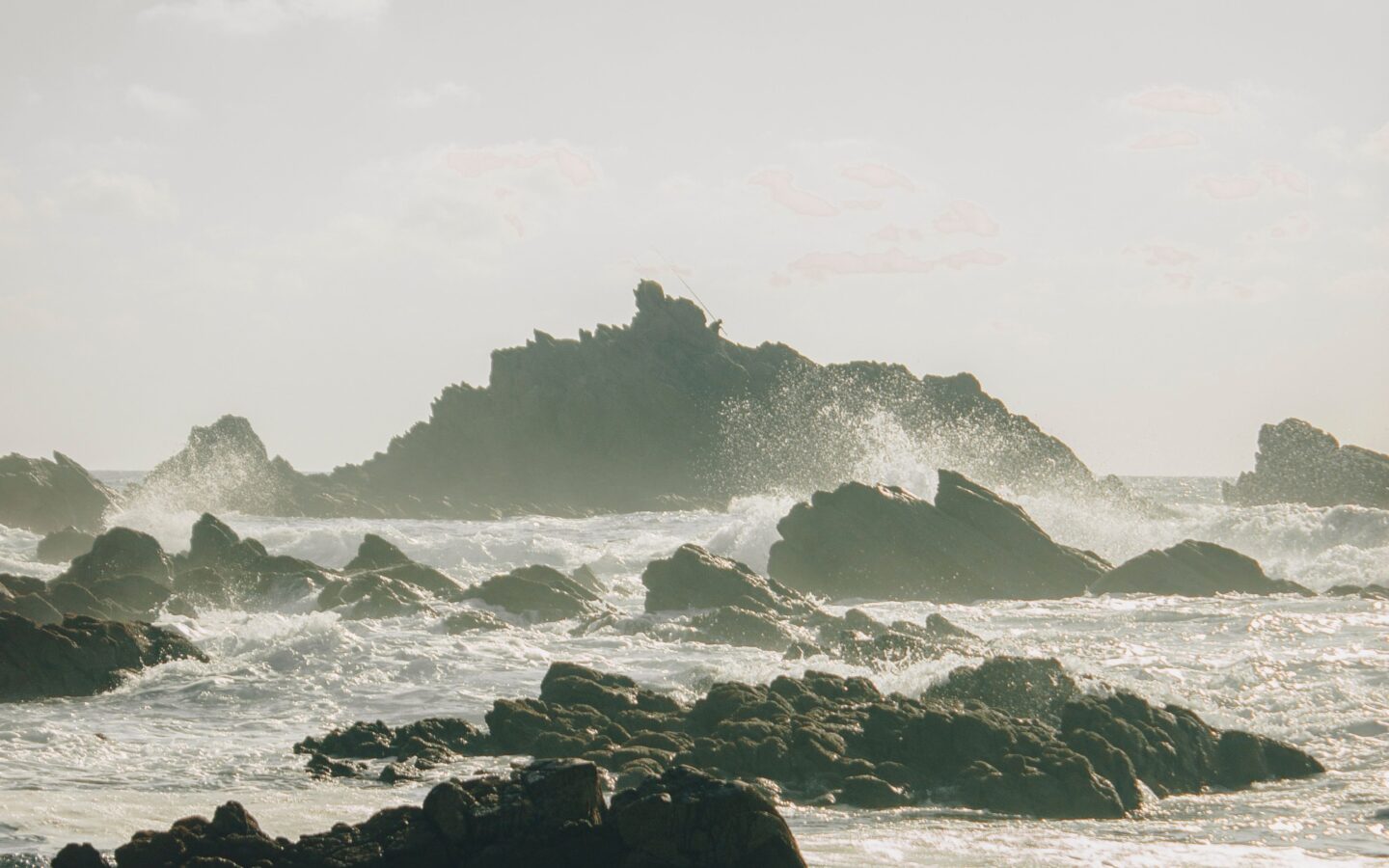
Mirleft is a year-round surf base on Morocco’s southern Atlantic coast, but the right time depends on your level. North Atlantic swell is generally more consistent and powerful from October to late March; the rest of the year often brings smaller days that can suit lessons and progression. Conditions still change by the hour, so choose the beach after checking swell, wind and tide—not from a fixed “best spot” list.
Mirleft works best when you choose the beach after checking the day’s swell, wind and tide. The sections below cover seasons, coastal areas, lessons, equipment and safety; confirm access and surf-school services directly before you go.
Surfing in Mirleft at a glance
- Best for: surfers who value a small-town base and several beaches within a short coastal corridor.
- Main swell season: October to late March usually brings the most consistent and powerful North Atlantic swell.
- Beginners: possible on suitable smaller days, preferably with a qualified instructor who chooses the location that morning.
- Typical breaks: shifting sand-bottom beach breaks plus rocky points and reef sections along the wider coast.
- Equipment: a wetsuit is useful year-round; ask a local shop about thickness for the week and your cold tolerance.
- Transport: you can surf near town without a car, but wheels make it easier to respond to wind, swell and access changes.
Is Mirleft a good place to surf?
Yes—if you want variety rather than one famous wave. Morocco’s tourism office identifies Mirleft as a surf destination with several spots for different levels. The coast alternates between open beaches, coves and rocky headlands, so two nearby locations can react differently to the same swell and wind. That variety is useful, but it does not mean there is a safe or suitable wave every day.
Mirleft is also a practical base: cafés, accommodation and everyday shops are in the village, while Imin Turga and Aftas are close to town. More exposed beaches and the coast toward Legzira and Sidi Ifni are easier with a car or surf-school transport. If your priority is nightlife or a dense choice of surf camps, the larger Agadir–Taghazout area offers more infrastructure. Mirleft fits travellers who prefer a smaller place and are willing to make decisions around the ocean.
Best time to surf Mirleft
There is no single best month for everyone. Official Moroccan tourism guidance describes the Atlantic coast as surfable throughout the year, with more consistent winter swell and gentler conditions outside winter. Treat this as a seasonal pattern, not a promise.
| Period | What it often brings | Who it may suit | Planning note |
|---|---|---|---|
| October–late March | More frequent and more powerful North Atlantic swell; bigger, faster surf is possible | Intermediate and advanced surfers; beginners only on appropriate days with instruction | Build flexibility into the trip because exposed beaches may be too large |
| April–May | A transition toward smaller swell, with changing wind and mixed-size days | Improvers and mixed-level groups | Check the morning wind and do not assume “shoulder season” means easy |
| June–August | Often smaller surf, while afternoon wind can reduce quality | Lessons, early-stage progression and longboards on suitable days | Book instruction rather than choosing a beginner beach from a map |
| September | Variable transition as the Atlantic pattern begins to change | Improvers seeking a balance of wave size and warmer weather | Judge the actual forecast, not the calendar |
The useful answer
Choose October to March if you already surf confidently and want the best chance of stronger swell. Choose late spring to early autumn if your priority is lessons or smaller waves. In either case, leave room to switch beaches—or skip a session—when wind, tide or current is wrong.
Surf areas around Mirleft
Spot names and spellings vary between maps and local use. The list below is an orientation, not a set of go-surf instructions. Sandbanks move, rocky entries can be concealed and the correct tide can change with swell direction and size. Ask a reputable local operator to assess the day.
Imin Turga (Imi Ntarga / Mirleft Beach)
Imin Turga is the broad main beach below Mirleft and the easiest surf area for a first-time visitor to identify. It is a sand-bottom beach break with shifting peaks rather than one permanent take-off point. On smaller days it can offer options for learners and improvers; when swell increases, currents, close-outs and the paddle-out can become demanding. Observe from shore before entering and do not interpret “sand bottom” as “risk free.”
Aftas
Aftas is a smaller cove close to town, used by fishers as well as beach visitors. Its shape can make it look more protected than the open coast, but wave quality and safety still depend on swell, tide, rocks and boat activity. Give working boats plenty of room and ask locally before treating the cove as a lesson location.
Tamhrouchte / Plage Sauvage
This more exposed beach is known for a wilder cliff-backed setting and stronger Atlantic energy. It may attract experienced surfers when conditions align, but access, rocks, currents and surf size make it a poor place for guessing. Visit with local knowledge and keep away from unstable cliff edges and caves.
Legzira and the Sidi Ifni coast
South of Mirleft, Legzira and Sidi Ifni add more beach and point options to a surf trip. They are not automatic fallbacks: the same winter swell can make parts of this coast powerful, and Legzira adds tide and rockfall hazards beneath eroding cliffs. Use a guide if you do not know the entries, exits and local etiquette.
Atlantic safety: decide from today’s ocean
- Check swell height, period, direction, wind and tide together. A wave-height number alone is not a safety assessment.
- Watch the beach for at least 15 minutes and identify currents, rocks, entries and exits before paddling out.
- Do not surf alone at an unfamiliar or remote break. Mobile reception and rescue access may be limited.
- Never assume lifeguards are present. Coverage can be absent or seasonal and must be confirmed that day.
- Keep clear of cliff faces, overhangs and caves. Low tide creates space; it does not remove rockfall or rising-tide risk.
- If in doubt, take a lesson, choose another activity or stay out of the water.
Emergency number: confirm the currently applicable local emergency contacts with your accommodation on arrival and save them offline.
Surfing in Mirleft for beginners
Mirleft can work for a first surf lesson, but “beginner-friendly” describes a particular session—not an entire beach. A good instructor checks the ocean first, chooses a suitable area, uses an appropriate soft-top board and keeps the group in water that matches their ability. On a large winter swell, the correct beginner decision may be not to surf.
For a first lesson, ask whether the price includes transport, wetsuit, board, insurance and a clearly stated lesson duration. Tell the school honestly about swimming confidence, age, injuries and previous experience. Parents should ask for child-specific ratios and equipment rather than relying on a generic “all levels” claim.
How to choose a surf school or guide
- Ask who teaches. Request the instructor’s qualification, first-aid training and the operator’s insurance details.
- Ask about group size. A small, ability-matched group makes supervision and feedback easier.
- Ask how the spot is chosen. The answer should refer to the day’s swell, wind, tide and group—not one fixed beach.
- Check the equipment. Boards, leashes and wetsuits should fit and be in sound condition.
- Clarify transport and cancellation. Know what happens if conditions are unsuitable and whether a safe alternative or refund is offered.
- Read recent feedback carefully. Look for comments about teaching, safety and communication rather than copied star ratings.
What to pack for a Mirleft surf trip
The Atlantic here stays cool enough that most visitors prefer a full wetsuit. A 3/2 mm suit may work for many people in milder periods, while colder months or cold-sensitive surfers may prefer more insulation. Water temperature, air temperature, wind and session length all matter, so confirm the week’s conditions before choosing.
- well-fitting wetsuit and a spare if you plan two sessions a day;
- reef-safe, water-resistant sunscreen, hat and drinking water;
- basic repair kit, spare leash and fin key if bringing your own board;
- small cash in Moroccan dirhams for local transport and services;
- offline maps and saved accommodation details;
- travel insurance that explicitly covers recreational surfing at your level.
A better daily surf plan
- The evening before: compare two forecasts and note the tide window, but do not lock in a beach.
- Early morning: check actual wind and ask a trusted local operator what changed overnight.
- At the coast: watch one full set cycle, identify hazards and choose an exit before entering.
- During the session: reassess if wind, tide, current or crowd changes.
- Afterwards: rinse gear, hydrate and note what the forecast got right or wrong for the next day.
Local etiquette in and out of the water
Follow normal surf priority: the surfer closest to the peak has the right of way, do not drop in and do not snake the queue. Paddle wide instead of through the riding line, control your board and apologise when you make a mistake. Give local surfers time and space; a quieter lineup is not an invitation to claim every wave.
Be equally considerate on land. Do not block fishing access, photograph people without permission or leave wax, tape and plastic behind. Use local services where they add genuine value, and keep exact locations of fragile or access-sensitive breaks off social media.
Plan the rest of the trip
Agadir Al Massira (AGA) is the most practical international gateway for most visitors. A direct transfer or rental car is simplest with boards; public transport is possible but takes more coordination and baggage rules must be checked. Use our guide to getting to Mirleft for the current route choices, then compare the coast in the Mirleft beaches guide.
Frequently asked questions
Can beginners surf in Mirleft?
Yes, on an appropriate small day with a qualified instructor. No named beach is suitable for beginners in every swell, tide and wind combination.
When is the best surf season in Mirleft?
October to late March generally offers the most consistent and powerful North Atlantic swell. Late spring through early autumn often brings smaller conditions that can be better for lessons. Choose by ability and current forecast.
Do I need a car for a Mirleft surf trip?
No. You can stay near town and arrange lessons or guiding with transport. A car gives experienced surfers more flexibility, but it also adds responsibility for unfamiliar roads, parking and board security.
Do I need a wetsuit?
Most visitors will be more comfortable in a full wetsuit because the Atlantic remains cool. Ask a local shop about current water temperature and choose thickness for your cold tolerance and session length.
Is Mirleft less crowded than Taghazout?
It often has a quieter reputation, but no empty lineup can be promised. Weekends, holidays, a good forecast and a working break can concentrate surfers quickly.
Where should I check the forecast?
Use a dedicated surf forecast such as Surfline, compare it with a second model, and confirm the interpretation locally. Forecasts cannot see a changed sandbank, blocked access or the ability of your group.
Sources
Seasonal patterns are only a starting point. Check the day’s forecast and ask a local instructor before choosing a beach.
- Moroccan National Tourist Office: Morocco, a board-sports destination — year-round surfing, winter consistency and Mirleft’s multiple surf areas.
- Surfline: Mirleft surf report — current swell, wind, tide and water-temperature context.
- Lineup: Imin Turga / Mirleft spot guide — sand-bottom beach-break character and condition-dependent hazards.
- Morocco High Commission for Planning: Mirleft commune monograph 2024 — official administrative context.